Back to the Good Old Clubbing Days: NYC Nightlife Is Making a Comeback
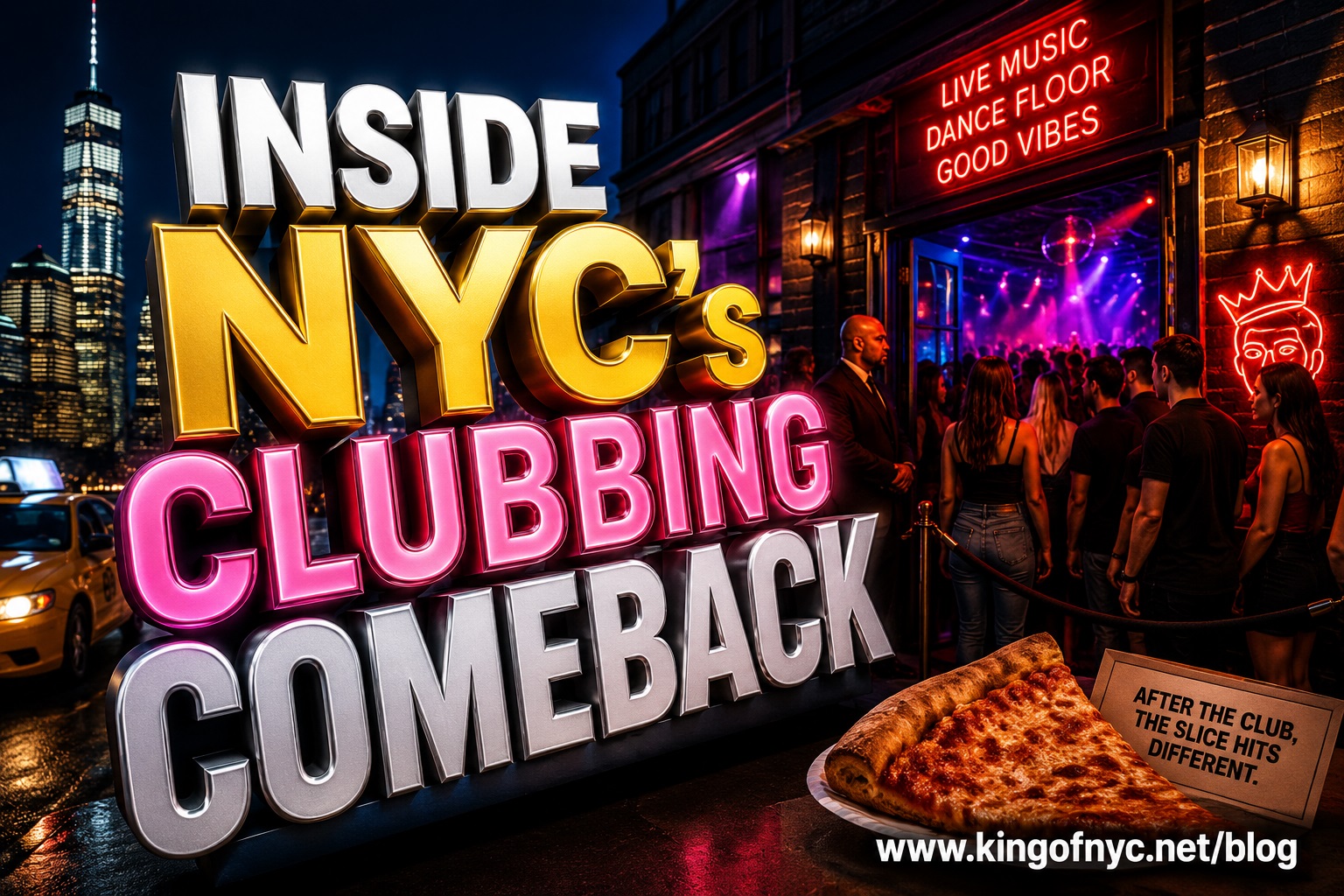
It’s 2:30 a.m. outside Artichoke Basille’s Pizza on 10th Avenue. A crowd of hungry, slightly intoxicated partygoers spills onto the sidewalk, waiting for a massive slice before heading home. The air is thick with the smell of melted cheese and cigarette smoke as friends laugh, swap stories from the dance floor, and squeeze in one last stop before calling it a night.
For years, this late-night ritual was the heartbeat of New York City’s nightlife.
But over the past decade, that energy gradually faded. The pandemic accelerated the decline of traditional nightclubs, while an explosion of ultra-exclusive private members’ clubs—including Zero Bond, Casa Cipriani, and Fly Fish Club—reshaped the city’s social scene. With sky-high membership fees, nearly impossible reservations, strict dress codes, and invite-only exclusivity, these venues catered to a privileged few, leaving many New Yorkers nostalgic for the vibrant, accessible club culture that once defined the city.
Now, that era may finally be returning.
Earlier this month, Tao Group Hospitality announced on Instagram that its legendary nightclub, Avenue, will reopen its doors. The announcement immediately sparked a wave of excitement and nostalgia from millennials eager to relive the unforgettable nights that made the venue iconic.
“It was never a goodbye,” the post declared, prompting hundreds of enthusiastic responses.
“This place was a movieeee,” one former regular reminisced.
“2026 is really the new 2016!!!!!,” another user wrote.
“Will Wass be at the door? Artichoke pizza upon exit? Absolute essentials,” another commenter joked, recalling the classic post-club routine.
Many described the reopening as a “cultural reset,” while others celebrated that New York was finally “healing.” Entrepreneur Cindy Ramirez summed up the mood perfectly: “I fear nightlife might be making a comeback. Thank God.”
If the reaction is any indication, New York’s legendary club scene may be ready for its next chapter.
The original Avenue nightclub, which shut down in 2020, was once one of New York City’s most sought-after nightlife destinations, attracting celebrities such as Lindsay Lohan and Justin Timberlake. Although its owners initially hoped to revive the club at its former location, those plans fell through after the building was sold to a new owner, according to Eater.
Now, Avenue is preparing for a new chapter. In partnership with Hudson Yards, the iconic venue will reopen as Avenue Sky Lounge, a 6,000-square-foot nightlife destination located on the 101st floor of 30 Hudson Yards, offering panoramic views of the Manhattan skyline.
“Avenue first came of age during a defining era of nightlife,” said Noah Tepperberg, co-CEO of Tao Group. “Back then, you had to make it past the velvet rope to discover what was happening inside. It was the pre-social media era, when the mystery was part of the experience.”
With Avenue Sky Lounge, Tao Group hopes to recapture the magic of New York’s early-2000s club scene while introducing a more polished and upscale atmosphere. The goal is to recreate the intimacy, excitement, and spontaneity that made the original venue legendary, while appealing to today’s nightlife crowd.
“We’re focused on bringing back those organic, unexpected moments that people remember, while staying true to the energy and intimacy that defined Avenue,” Tepperberg explained.
The reopening also comes at a time when many believe the city’s private members’ club boom may be losing momentum. Over the past several years, exclusive venues have reshaped New York’s nightlife, placing greater emphasis on status, memberships, and restricted access rather than the shared experiences that once united diverse crowds on the dance floor.
According to Tepperberg, people are beginning to crave something different.
“We’ve seen renewed interest in nostalgic venues from an era when nights out felt more spontaneous and were driven by music, energy, and genuine connection,” he said.
While acknowledging that private clubs continue to appeal to those seeking curated, intimate environments, Tepperberg believes there’s growing demand for nightlife that’s more inclusive.
“Members’ clubs absolutely have their place and have created an entirely new social scene,” he said. “But we also think people are looking for nights that feel open, welcoming, and shared by everyone.”
One venue already capturing the spirit of New York’s nightlife revival is Jean’s on Lafayette. By day, it serves as a stylish farm-to-table restaurant, but after dark, the downstairs transforms into a lively party destination that consistently attracts crowds of young New Yorkers. On most evenings, eager guests line up around the block, hoping to get inside.
The team behind Jean’s says the secret is creating an atmosphere that’s impossible to replicate in exclusive members-only clubs.
“We built this place to feel like a wedding reception that never ends,” a representative from Jean’s told The Post, explaining that the venue thrives on spontaneity and genuine social interaction rather than exclusivity.
The rep joked that people eventually leave what they called “Temu country clubs” in search of something more authentic.
“They come here to mingle with strangers,” the representative said. “Sometimes we’ll even turn dinner into a full-blown party, like we did after a Patti Smith performance with Jimmy Choo.”
Jamie Mulholland, owner of Ketchy Shuby on Broome Street—another hotspot known for blending dining with dancing—believes nightlife lovers are increasingly seeking memorable experiences instead of carefully curated exclusivity.
This summer, Mulholland plans to revive some of that classic party energy by reopening Ketchy Shuby in the former Lily Pond location, a legendary Hamptons nightclub that helped define the early-2000s nightlife scene.
“Our focus this year is bringing back the Hamptons nightlife experience people remember,” Mulholland said. “We want to recreate that gritty, exciting, and genuinely fun atmosphere that made going out so special in the early and mid-2000s.”
For many industry insiders, however, the resurgence of nightlife isn’t driven by nostalgia alone. It’s also a response to an increasingly digital world where authentic, face-to-face interaction has become more valuable than ever.
Jack Mulqueen, owner of the Lower East Side venue Outer Heaven, believes that as artificial intelligence, social media, and digital communication continue to dominate everyday life, people will place even greater importance on real human connection.
“The deeper we move into the age of AI, social media, and digital isolation, the more the next generation will appreciate genuine, face-to-face interactions,” Mulqueen said. “That’s why clubbing, in one form or another, will always endure.”
Source : Nypost Edited by Bernie