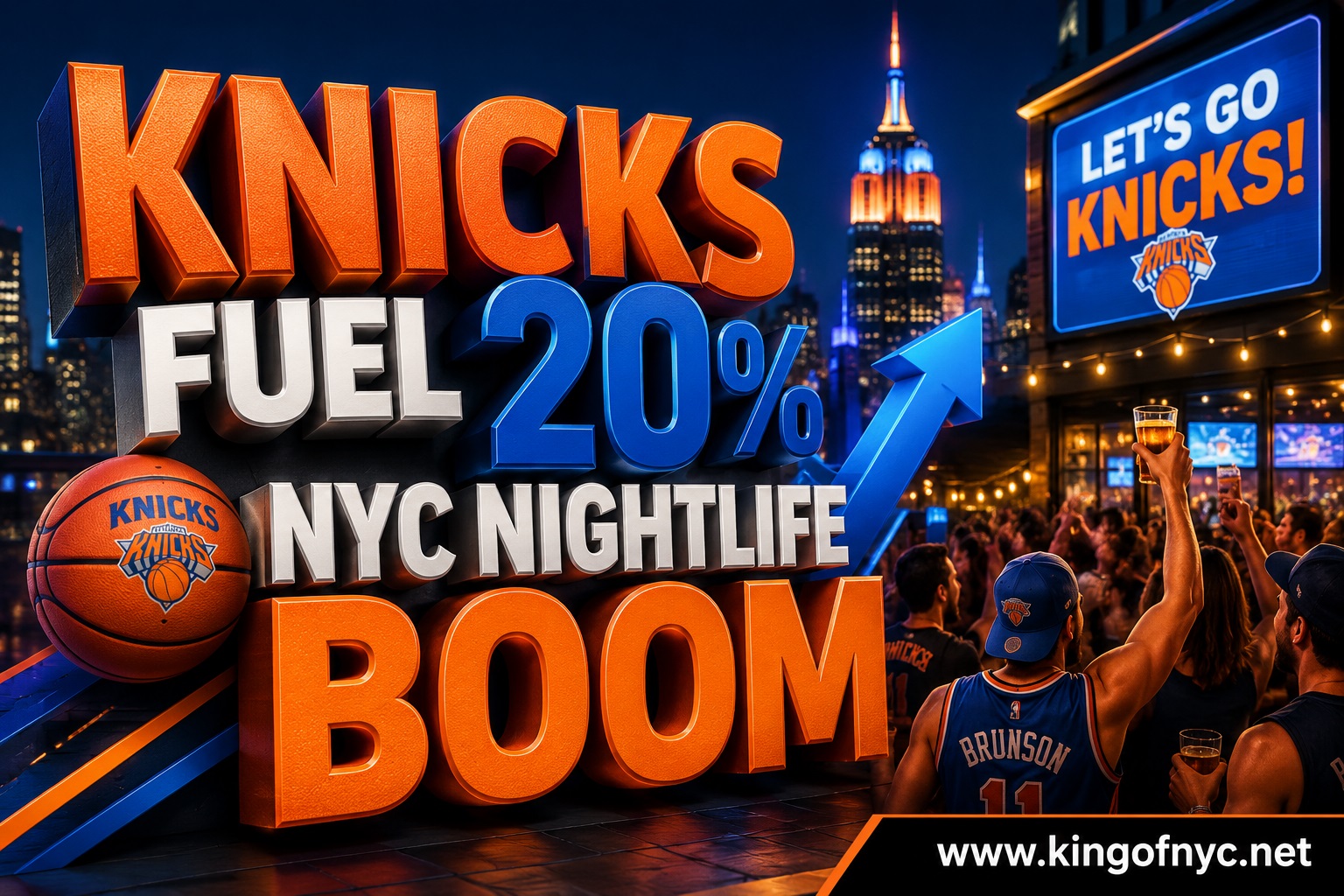
The New York Knicks’ thrilling NBA Finals run proved to be a game-changer not only on the court but also for New York City’s hospitality industry.
According to a new survey released by the New York Hospitality Alliance, more than half of the city’s bars experienced at least a 20% increase in revenue during the Knicks’ playoff and Finals campaign, as fans packed venues to cheer on their hometown team.
The report, published Wednesday, surveyed around 100 businesses across New York City’s bar, restaurant, and nightlife sectors. The results highlighted the economic boost created by the team’s success, with 90% of restaurants reporting higher sales and 70% saying they increased staffing to handle the surge in customers throughout the postseason.
Andrew Rigie, executive director of the New York City Hospitality Alliance, said the excitement surrounding the Knicks created a ripple effect across the local economy.
“When people are excited and feeling optimistic, they go out, spend money, and enjoy themselves,” Rigie told The Post. “That kind of energy is good for businesses and the city as a whole.”
The findings underscore how a successful sports season can extend far beyond the arena, driving increased foot traffic, stronger sales, and more employment opportunities for New York City’s hospitality industry.
Rigie said New York’s bars and restaurants played a central role in bringing fans together throughout the Knicks’ unforgettable playoff journey.
“So much of New York City’s spirit and social life is found in its bars and restaurants,” he said. “It was incredible to see these businesses become gathering places where fans could celebrate such a historic Knicks playoff run.”
The survey found that more than half of the city’s bars showing Knicks games recorded sales increases of over 20% on game days, while nearly one-third reported revenue jumps exceeding 30%.
To meet the surge in demand, about 30% of businesses invested in new televisions or upgraded their viewing equipment. Many establishments also extended operating hours, organized watch parties, introduced special game-day promotions, and stocked up on food and drinks to accommodate larger crowds.
The increased business also created more employment opportunities. In addition to hiring new staff—many of whom Rigie expects to remain employed through the upcoming FIFA World Cup—businesses expanded shifts for current bartenders and brought in third-party security personnel to manage the larger gatherings.
Martin Whelan, owner of the Stout chain of sports bars in Manhattan, described the Knicks’ playoff run as unlike anything he has witnessed in three decades in the hospitality industry.
“I’ve been in this business for 30 years, and I’ve never experienced anything like it,” Whelan said.
He recalled customers lining up outside his bars night after night as fans gathered to watch the games. Some Stout locations saw revenue soar by as much as 200%, while the chain’s Penn Station venue reportedly built a waiting list of nearly 1,400 people during the team’s postseason run.
According to Whelan, the overwhelming demand turned each game into a major event, delivering one of the busiest and most profitable stretches his business has ever experienced.
The overwhelming demand pushed hospitality workers to their limits, with many employees taking on multiple roles to keep service running smoothly.
“Everyone was working incredibly long hours,” one bar owner said. “Servers became bartenders—everyone pitched in.”
Ian Conroy, who has co-owned Mustang Harry’s with his brother Niall since 1995, said the Midtown sports bar has enjoyed a 60% increase in business since the Knicks secured their playoff berth.
Loy Gordon, owner of Neir’s Tavern in Woodhaven, Queens, said the postseason excitement transformed his nearly 200-year-old neighborhood pub into an unexpected sports hotspot.
“It was unprecedented,” Gordon said. “Neir’s Tavern isn’t really known as a sports bar, but during the playoffs, it certainly felt like one.”
Gordon estimates the tavern generated an additional $20,000 to $30,000 in unexpected revenue during the Knicks’ playoff run. The only challenge, he said, was accommodating the overwhelming number of fans.
“People were standing outside trying to watch through the door because we were already at capacity. It was a good problem to have.”
The survey’s findings add to the growing evidence of the Knicks’ economic impact. City officials previously estimated that, through just the first three home playoff games, the team’s postseason run had already generated about $202 million in economic activity from ticket sales, concessions, merchandise, transportation, and hotel stays.
Earlier projections from the city’s Economic Development Corporation suggested the total economic boost could climb to as much as $465 million if the playoff momentum continued.
Andrew Rigie believes the benefits could extend well beyond this season, as many fans discovered new favorite gathering spots while following the Knicks.
“A lot of people visited bars they had never been to before, and many of those places will likely gain repeat customers,” he said.
Rigie ended on a lighthearted note, saying the city’s next economic strategy might be simple:
“Now we just need the Knicks to win another championship next year.”
Source: Yahoo Finance Edited by Bernie