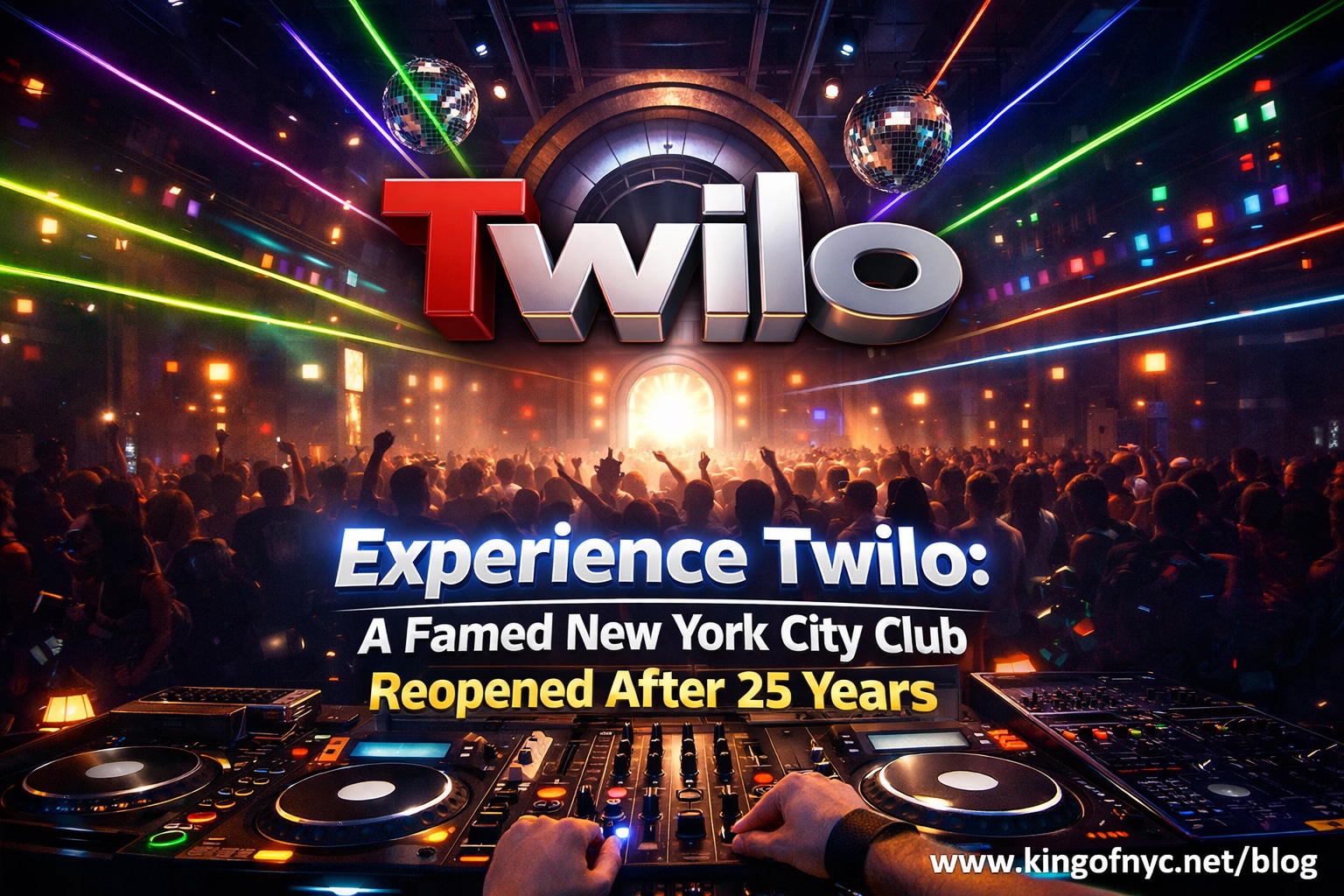
On Friday, March 6, and Saturday, March 7, the renowned venue opened its doors once again for the Twilo Reunion, fusing old-school New York City club greatness with a modern twist.
It was a different era of New York City nightlife.
It was the mid-’90s and early 2000s—when most clubs were in Manhattan, unlike today, when many have shifted to Brooklyn. It was a time when acclaimed artists like Danny Tenaglia, John Digweed, and Sasha played at one of the city’s most iconic venues.
It was the era of Twilo.
“A typical night at Twilo was electric from the moment you passed the entrance and walked down its legendary hallway,” said Alan Sacks, the owner of the Twilo brand and CEO of Twilo Events, an event engineering and production company. “The energy was immediate. The vibration of the music pulled you in, and that hallway became a rite of passage, carrying you into another dimension. You could sense that something powerful was happening before you even reached the dance floor,” he added.
Fast-forwarding to 25 years after its closure, the club reopened for two nights, giving dance music lovers a chance to experience Twilo once again. The event, dubbed Twilo Reunion, took place on Friday, March 6, and Saturday, March 7. There was a no-camera policy in place.
Friday night’s show featured performances by John Digweed and Danny Tenaglia. It was fitting that the two performed on the club’s opening night, as they had played one of the final sets at Twilo before it closed in 2001.
John Digweed had been integral to the development and popularization of the progressive house sound in the 1990s. His history with Twilo dated back to his monthly residency alongside Sasha. “For me, Twilo was the best club in the world that I have ever played at, primarily because of that sound system,” Digweed said. “Every month was special for me, as I truly understood how unique that room was, and playing on that incredible sound system brought every track to life.”
Danny Tenaglia was known for his omnifarious approach to house music, playing everything from tribal to garage, progressive, and tech-house. He had been instrumental in popularizing the dark, percussion-heavy sounds that defined New York house music during the ’90s. According to Tenaglia, who held a Saturday residency at Twilo, the club was “all about the sound—the music,” and had “that pure, original, authentic underground dance party vibe.”
On Saturday, he performed again, this time solo on Twilo’s main floor for an event titled Tenaglia’s Birthday: Twilo Classics (All Night Long). An open-to-close set like this allowed the tastemaker to take attendees on a sonic journey. He spinned tracks defined as Twilo Classics—similar to those featured on his CD compilations—alongside newer music, creating a set style he described as “past, present, and future.” In addition to his performance, Carry Nation and Benny Soto played in the loft on the second floor.
“I really couldn’t remember a time when a club that had shut down reopened 25 years later, essentially picking up where it left off, since most venues that closed were usually demolished and turned into apartments,” John Digweed said. “It was a pretty historic night in terms of club culture, allowing people to almost go back in time.”
The nostalgic evenings were the first in the Twilo Series. “We were only going to come back with the best DJs who had played at Twilo,” said Eric Ortense, one of the producers of the series. When Twilo was open, he had worked as a promoter. After his time with the venue, he went on to work as a talent buyer for Sound Factory and as Danny Tenaglia’s tour manager and promoter.
The event series boasted an impressive sound system. Twilo Events collaborated with STAX, a high-end audio production company, to produce the sound and overall audio experience. “Our ultimate goal was to create an immersive sound environment where the listener felt surrounded by the music, honoring legendary DJs and their artistry, while delivering a sound system that resonated deeply and stayed with people long after the music ended,” said Alan Sacks.
The sound system was key to the shows because Twilo originally utilized the world-renowned “Phazon” sound system, which had set a new standard for club audio at the time. “The most important aspect of Twilo was the Phazon sound, which was truly mind-blowing,” John Digweed said. “It was crystal clear and covered every part of the club, yet you could speak normally, and your ears didn’t hurt after 12 hours of dancing on that sprung wooden floor. Producers even started making records specifically for our nights there, as the sound was so powerful. Tracks suddenly had a ‘Twilo’ sound attached to them.”
The series also featured a lighting experience that “brought back that old-school NYC club vibe,” Alan Sacks said. The lighting was presented in collaboration with Dougie Lazer and was designed to complement the sound system.
Notably, many people who had worked at Twilo—such as the doorman, bartenders, and security staff—returned to work the Friday, March 6, and Saturday, March 7 shows. “My heart was on my sleeve. My commitment was to deliver the best lights, the best sound, the best experience to the friends and people who made it all happen 25 years ago,” Eric Ortense said. “I was doing this for everyone else. It wasn’t about the money—it was about bringing the reunion to life.”
Alan Sacks said the original team members had shaped Twilo, so having them at the shows “helped bridge the gap between Twilo’s past and its present, grounding the event in authenticity.” The event wasn’t just marketed as a reunion—it truly was one for the people who had worked there and the attendees who had danced there all night, reviving the essence of what Twilo once was while also introducing it to a new crowd.
“The reunion was a celebration of Twilo’s legacy, but it was also about presenting its spirit in a fresh and purposeful way,” Sacks said. “It was about crafting an experience that reflected why Twilo mattered then and ensuring it continued to matter now. By blending what made it special with modern sensibilities, we were creating something that spoke to both longtime supporters and a new generation of music lovers.”
Source: forbes Edited by Bernie