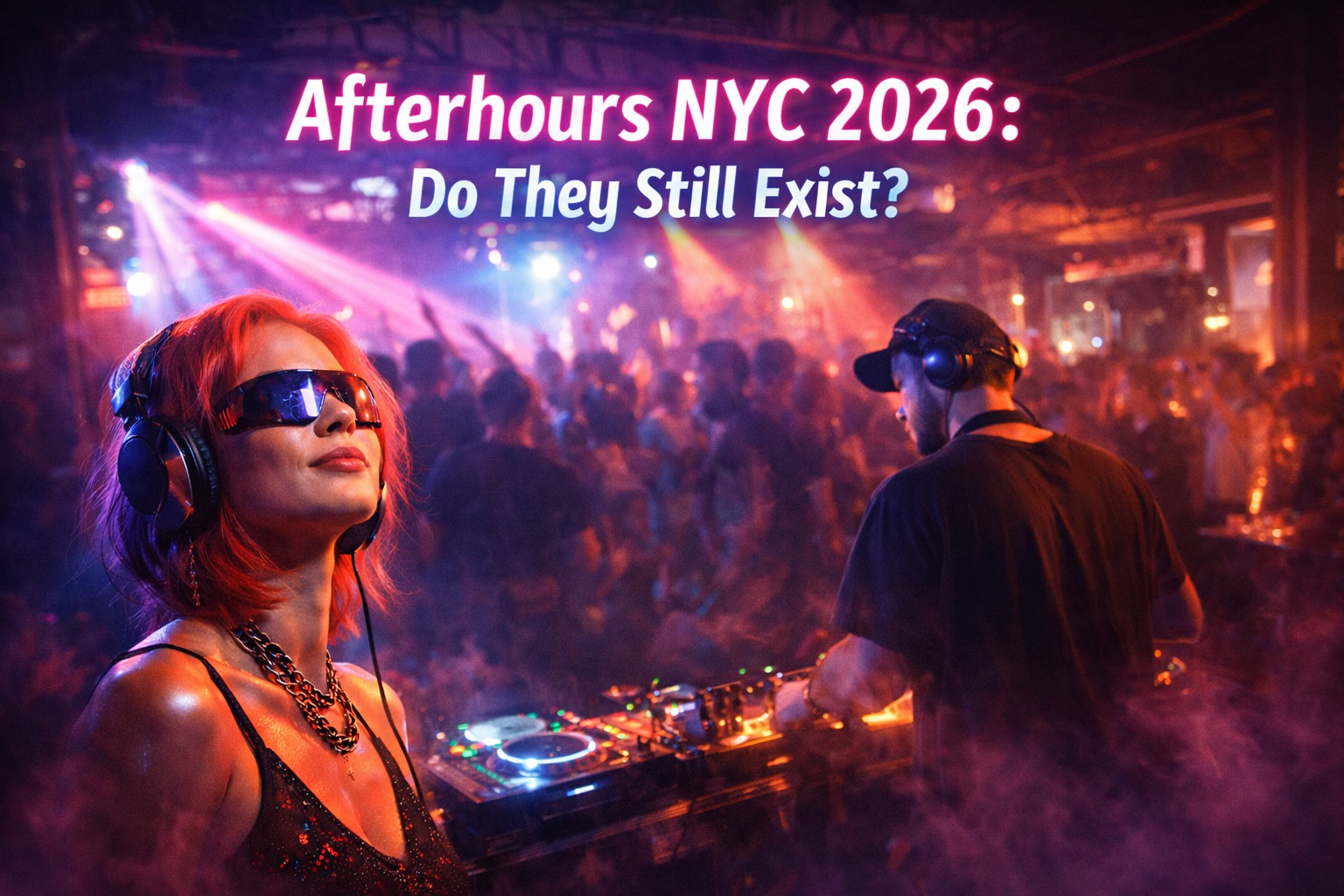
📉 The Traditional Afterhours Club — A Fading Beast
Strictly speaking, the classic afterhours club — venues legally open well past the regular 4 a.m. bar and nightclub closing time — don’t really exist anymore in the mainstream sense in New York City. Unlike Miami or Berlin, NYC’s nightlife is still tightly regulated: liquor licenses typically force closures around 4 a.m., and there aren’t many legal 24-hour venues like Miami’s E11even (though there have been proposals to bring one here).
Even though some historic nightclubs and dance venues still thrive — forming part of the city’s internationally recognized nightlife ecosystem — the afterhours identity shifted rather than disappeared.
🌃 Why the Traditional Afterhours Club Culture Shifted
🧱 Legal Constraints
- State and city rules mean that alcohol stops being sold around 4 a.m., with strict caps on later service.
- Without alcohol sales, few venues can generate the revenue needed to run legal all-night operations.
🏙️ Economic Realities
- Rising rent and operating costs have forced many nightlife venues to close or evolve into different formats.
- Even well-known clubs with strong crowds can shut down if the business model isn’t profitable.
🎭 Shift to Private & Partisan Events
Instead of physical afterhours clubs, New York’s nightlife has given rise to more event-based after parties, fashion-linked raves, circuit events (like Fever NYC Pride afterhours), and themed marathon parties that start late and continue past normal club hours without necessarily being traditional clubs.
🔥 The Rise of After-Parties & Secret Events
📍 Secret After Parties
What New York does have in 2026 are underground, almost secret rave-style after parties, often promoted quietly through:
- Private RSVPs
- Newsletters
- Social networks like Resident Advisor
These can start after a club closes and sometimes run well into the daytime, especially around weekends or holidays.
A few things to know about them:
- They aren’t official clubs — they’re often warehouses, loft spaces, or rented studios.
- Info is kept low key so they don’t attract unwanted attention from authorities.
- Tracks range from house and tech to Afrohouse and melodic techno.
Though the Secret Society Afterhours events you might’ve heard about now circulate more as a brand or concept than as a fixed venue.
🎶 The Culture of After Hours in 2026
🕺 Late-Night Scene Has Evolved
Rather than one big afterhours club:
- Large downtown clubs and Brooklyn warehouse events will host extended hours or multi-day marathons of music.
- Street culture and DIY spaces host basement parties the morning after the main club closes.
📍 Bushwick & Other Hubs
Brooklyn neighborhoods like Bushwick retain a reputation for unofficial late-night and sunrise parties, often near art galleries or in converted industrial spaces.
🪩 Niche & Circuit Events
Circuit parties like Fever NYC Afterhours around Pride and other major festivals add flavor to the post-club narrative: citywide celebrations that blend official nightlife with extended dance sessions.
📊 What New York’s Nightlife Looks Like in 2026
Rather than a landscape dominated by hours-bending nightclubs:
- Late-night culture persists in underground events and warehouse parties
- Secret afters thrive by invitation and word-of-mouth
- Festivals and circuit events boost extended party culture
- Physical clubs generally close around official 4 a.m. limits
- The city’s nightlife overall remains robust and dynamic, even without many traditional afterhours clubs.
🎤The Afterhours Legacy Lives On — Just Not in the Same Form
Yes — NYC still has afterhours vibes in 2026, but they’re a mosaic:
- There aren’t many traditional afterhours clubs the way there were in the 80s and 90s.
- Party culture shifted underground, into warehouses, and into event-centric formats.
- Secret after-parties and extended festivals have replaced all-night dance clubs as the heart of the city’s late-night heartbeat.
For many New Yorkers and visitors alike, the afterhours experience is now less about a single venue and more about a lifestyle — one where knowing the right promoter, crew, or newsletter is the real ticket into the city’s all-night subterranean soundscape.